The technology underneath
Cable Was Designed to Send Far More Than It Receives
The physics of coaxial plant favour downstream. DOCSIS 4.0 can narrow the gap, but the architecture still shows its origins.
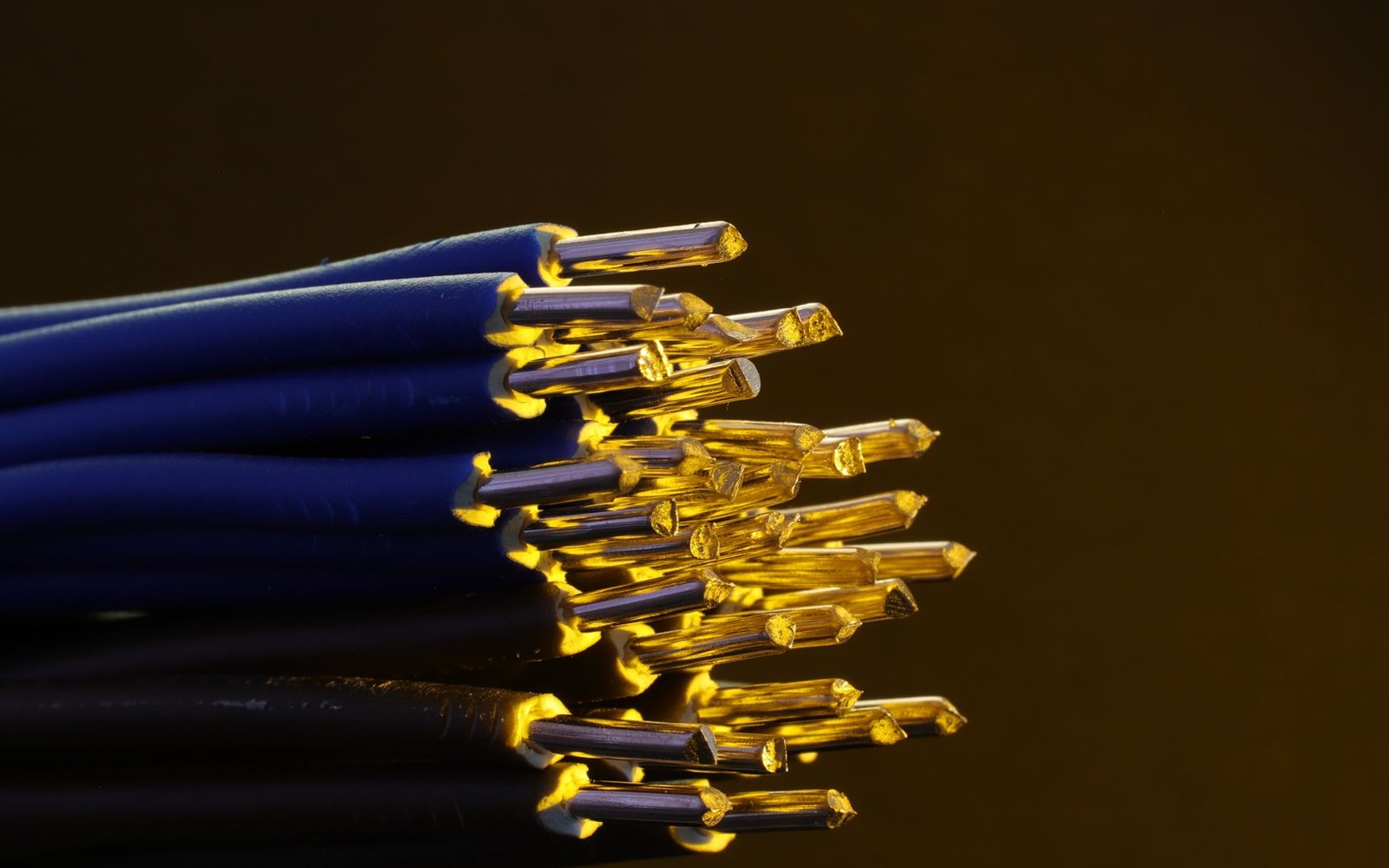
Coaxial plant allocates far more spectrum downstream than up, which is a design decision, not a fault.
Photo: Nic Wood / Pexels
Why the Spectrum Split Exists
A cable television system was built to do one thing well: push video signals from a headend into homes. The coaxial cable plant that carried those signals allocated nearly all of its frequency spectrum to the downstream direction — from provider to subscriber — because that was the only direction that mattered. When cable operators began offering broadband in the 1990s, they inherited that same physical infrastructure and the same frequency assumptions.
Under the original DOCSIS architecture, upstream traffic — the signals travelling from a subscriber's premises back to the network — was confined to a narrow slice of low-frequency spectrum, roughly 5 to 42 MHz on most deployed plant. Downstream traffic occupied the wide, high-frequency band above that. The ratio was never equal, and it was never meant to be. A household downloading a film needed vastly more capacity than one uploading a cable bill payment. That logic held until remote work, video conferencing, cloud storage and real-time collaboration made upload speed a daily constraint rather than an edge case.
The edge of a service territory. Past it, a map dispute decides on paper who counts as served.
Photo: Adi Nagesh / Pexels
The result is a hybrid fibre-coaxial (HFC) network whose upstream capacity is structurally limited by the coaxial segment — the "last mile" copper still connecting most homes to the fibre backbone. DOCSIS 3.0, the version deployed at scale through most of the 2010s, could aggregate multiple upstream channels but could not fundamentally change the frequency plan. Operators offering "100 Mbps" plans routinely paired those with 10 Mbps or 5 Mbps upload — numbers that looked adequate in a download-centric world.
What DOCSIS 3.1 and 4.0 Actually Change
DOCSIS 3.1, standardised by CableLabs and introduced to consumer markets around 2016, brought a more efficient modulation scheme — OFDM and OFDMA — that extracted more bits from the same spectrum. It allowed upstream spectrum to expand toward 85 MHz on upgraded plant, and it pushed theoretical downstream capacity into the gigabit range. In practice, the upstream gain was real but modest; most DOCSIS 3.1 deployments still provided upload speeds well below 100 Mbps, and the frequency boundaries of the coaxial segment remained the binding constraint.
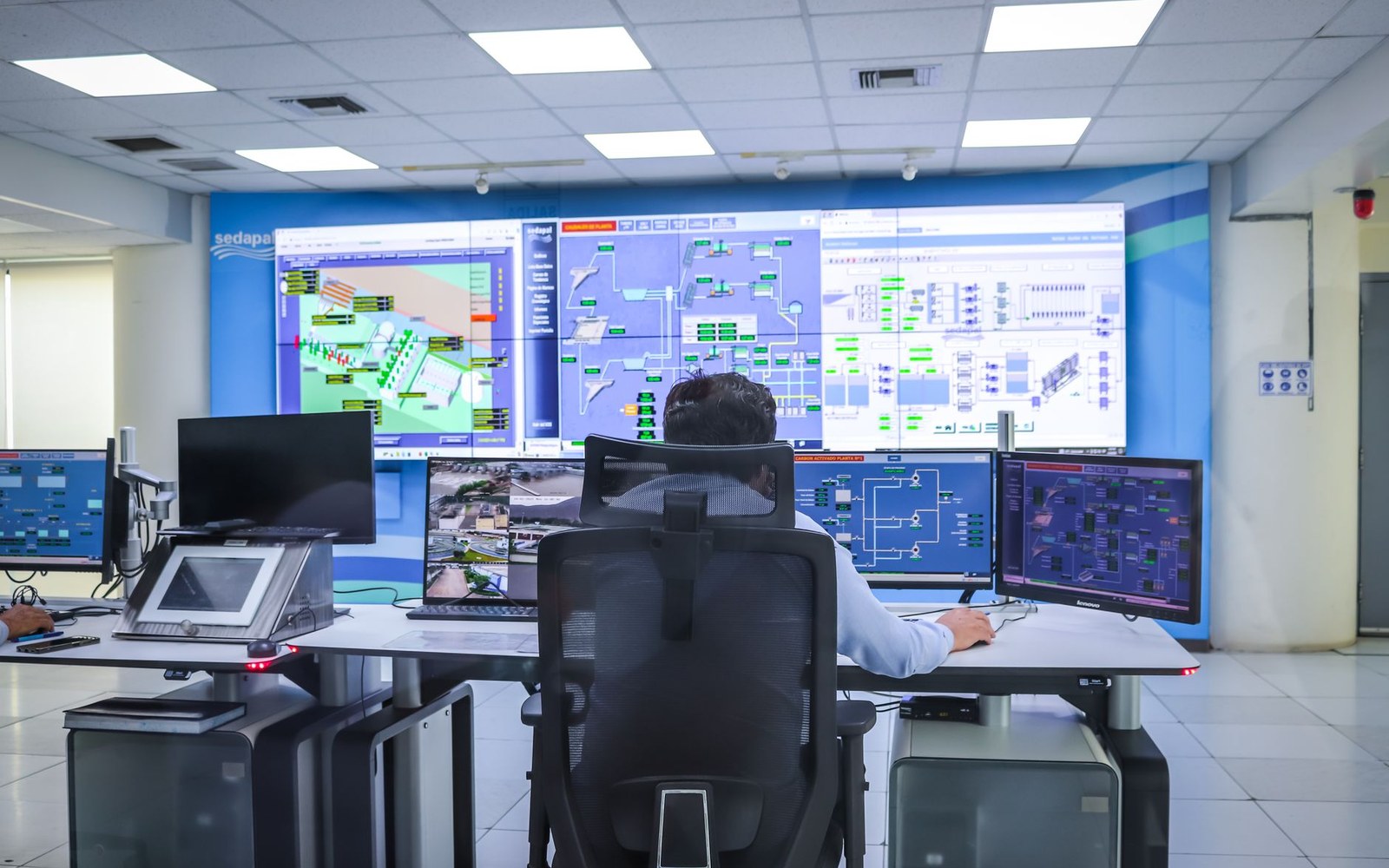
Selling retail service means staffing a room like this one continuously, whoever owns the strand.
Photo: Fernando Narvaez / Pexels
DOCSIS 4.0 attempts to break that constraint in two different ways, reflecting two competing upgrade strategies within the cable industry. Extended Spectrum DOCSIS (ESD) pushes the upstream band higher still — to 684 MHz in some configurations — requiring significant amplifier and node upgrades across the coaxial plant. Full Duplex DOCSIS (FDX) takes a different approach, allowing upstream and downstream signals to share the same spectrum simultaneously through echo cancellation, but requires shorter node segments and more fibre push into the network. Both paths promise symmetrical or near-symmetrical gigabit service on coaxial plant. Neither is cheap, and neither is yet deployed at meaningful national scale.
The engineering timeline matters for policy. DOCSIS 4.0 equipment has been certified and early deployments are underway at major operators including Comcast and Charter, but widespread residential availability remains years away for most markets. In the interim, the cable industry's actual upload performance is the performance of its DOCSIS 3.1 and 3.0 installed base.
The 20 Mbps Upload Problem
When the FCC revised its fixed broadband benchmark in 2024 to 100 Mbps download and 20 Mbps upload, the 100 Mbps downstream figure was already within reach for most cable subscribers on DOCSIS 3.1. The 20 Mbps upload figure was the genuinely difficult number. An HFC network serving a dense node — dozens or hundreds of households sharing upstream spectrum — can struggle to guarantee 20 Mbps to every active subscriber simultaneously. The shared-medium nature of coaxial plant means upstream capacity is divided among concurrent users, not dedicated to each one.
Fibre-to-the-premises networks, by contrast, deliver symmetrical throughput by design: each subscriber's optical strand carries upload and download on separate wavelengths with no shared coaxial bottleneck. Municipal utilities in Chattanooga and Wilson delivered symmetrical gigabit service years before the cable industry began debating how to achieve it. The FCC's 20 Mbps upload threshold, modest as it sounds, marks the boundary where coaxial architecture begins to work against itself — and where the argument for fibre investment becomes, technically at least, the easier one to make.