The technology underneath
A Device and a Place to Use It Are a Separate Problem From the Line in the Street
Running fibre to a home solves one problem. A household without a device, a skill, or a reason to subscribe faces three more.

Enrollment help and device access are a different intervention from construction.
Photo: Yan Krukau / Pexels
The gap infrastructure cannot close
A completed network passes a house; it does not connect the person inside it. The digital navigator model addresses that gap directly. A digital navigator is a trained community worker — often based in a library, community centre, or social-services agency — who helps residents acquire devices, navigate low-cost subscription programmes, and build the practical skills to use a connection once it exists.
The National Digital Inclusion Alliance (NDIA) has documented the model extensively, distinguishing it from one-time digital-literacy classes or hotspot-loan programmes. Navigators work in sustained, often one-on-one relationships with residents, and NDIA research identifies device access and affordability as barriers that persist even where infrastructure is physically available. A household earning too little to afford a monthly plan, or owning no device capable of running current software, is unserved in practice regardless of what passes under the street.
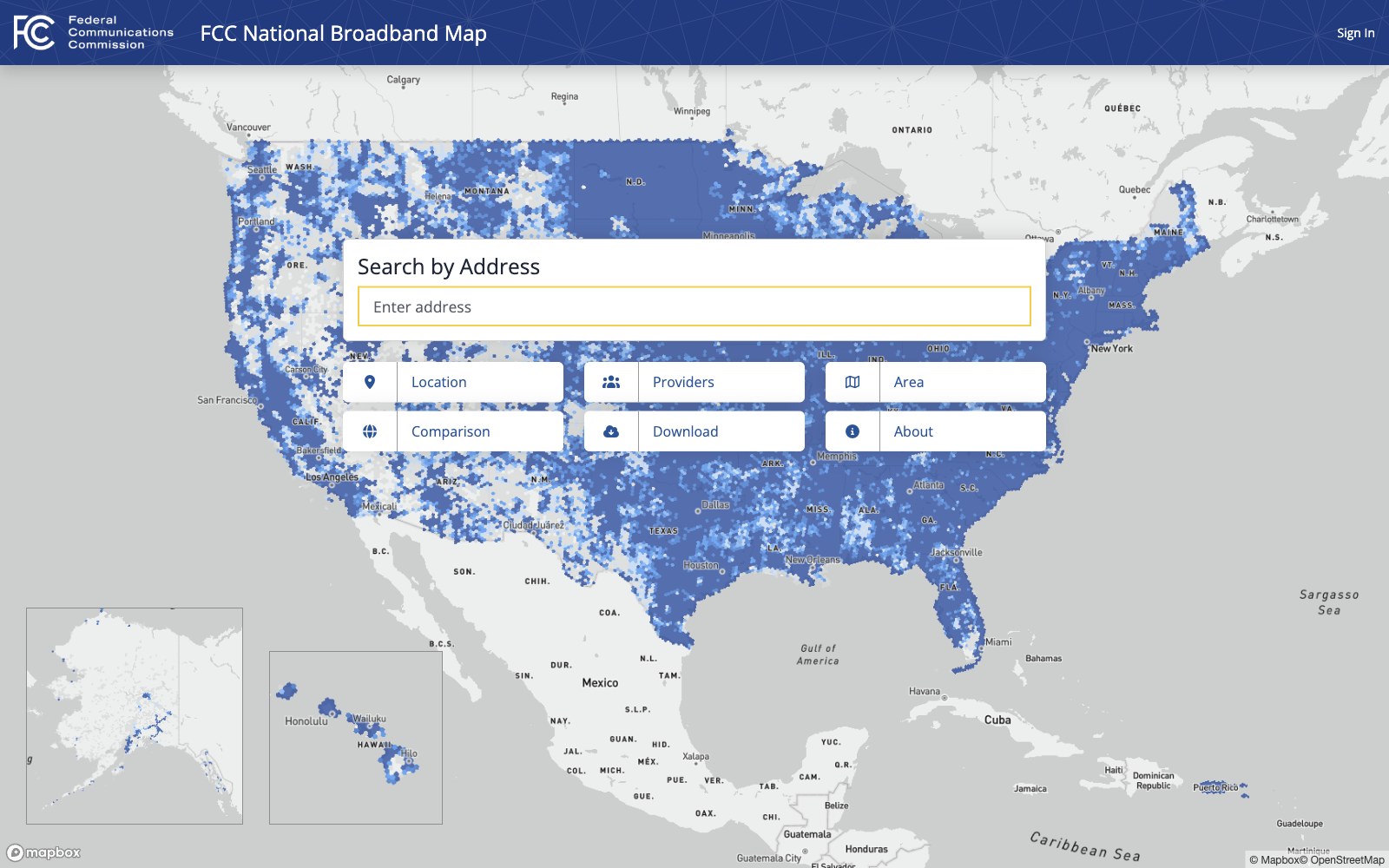
The national map is assembled from provider self-reporting, which is the reason the challenge process exists.
Photo: broadbandmap.fcc.gov
Aerial strand is cheaper than trenching, and the pole it hangs from usually belongs to somebody else.
Photo: Дмитрий Рощупкин / Pexels
The distinction matters for policy. Infrastructure programmes — BEAD's $42.45 billion, administered by the NTIA, is the largest active example — fund construction. They do not fund navigators, devices, or adoption support except at the margins. The Affordable Connectivity Program, before its June 2024 exhaustion, subsidised monthly bills for enrolled households; it did not supply the laptop or the person to explain the enrollment form.
States and municipalities have begun funding navigator positions directly, sometimes through libraries, sometimes through public-health or workforce agencies. The Skokie Public Library's long record of public-terminal access and community technology programming reflects exactly this logic: physical infrastructure and human support are complements, not substitutes. Neither alone reaches the households most likely to remain offline.
A fibre strand under a street is necessary. It is not sufficient.