Towns that built it themselves
Lafayette's Power Company Became Its Internet Provider
A Louisiana city utility extended its mandate from electricity to fibre broadband — and then spent years in court before it could connect a single customer.

Lafayette ran its own electricity before it ran its own fibre, and the second grew out of the first.
Photo: Lafayette LA July 2008 Downtown Lafayette Aerials 011 · Wikimedia Commons
From Kilowatts to Kilobits
Lafayette Utilities System, the municipally owned electric, water and gas authority that has served Lafayette, Louisiana since the late nineteenth century, launched LUS Fiber in 2009 after a years-long campaign to authorise, defend and finance a city-built fibre network. The path from vote to first customer was anything but direct.
In 2005, Lafayette residents approved a referendum authorising the utility to issue bonds and construct a fibre-to-the-premises network. Cox Communications and BellSouth — the incumbent cable and telephone providers — challenged the project in Louisiana state courts, arguing procedural and statutory violations. The litigation dragged through multiple rulings before the Louisiana Supreme Court cleared the way for construction. By the time LUS Fiber lit up its first subscribers, nearly four years had passed since the vote.

Selling retail service means staffing a room like this one continuously, whoever owns the strand.
Photo: Fernando Narvaez / Pexels
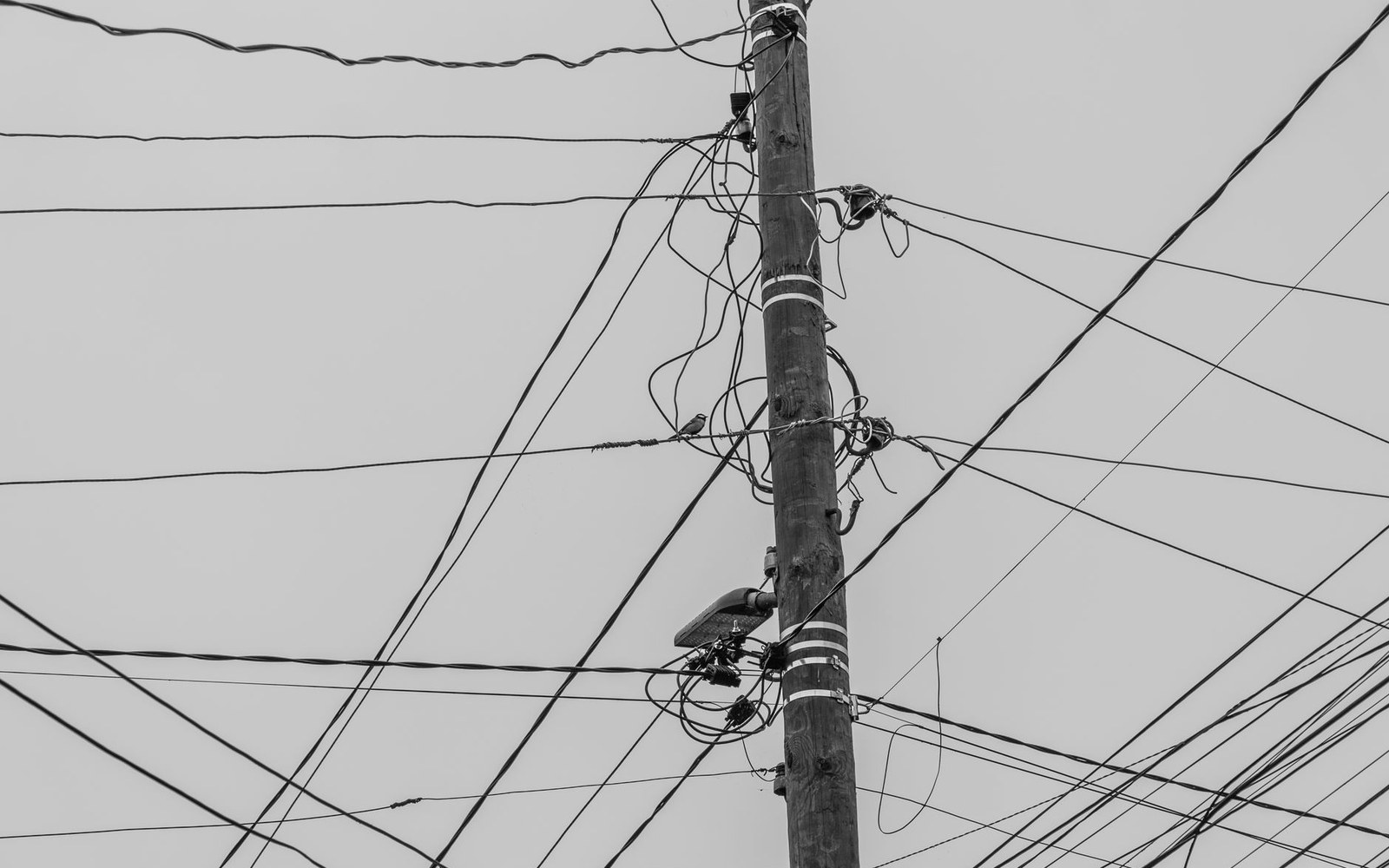
Aerial strand is cheaper than trenching, and the pole it hangs from usually belongs to somebody else.
Photo: Дмитрий Рощупкин / Pexels
Terry Huval, who directed the utility through the launch, framed the project consistently as an extension of Lafayette Utilities System's existing public-power mission: infrastructure the community owns, operates and prices in the public interest. That logic — already settled for electricity — proved considerably harder to apply to broadband.
Once operational, LUS Fiber offered symmetrical gigabit service, competing directly with Cox on price and on upload speed, where coaxial cable networks face inherent technical limits. The Institute for Local Self-Reliance has cited LUS Fiber as a durable example of a utility-extension model: no separate authority required, no open-access structure, just a public utility adding a service line as it had added others before.
Louisiana did not enact a statute preempting municipal broadband, which distinguished Lafayette's legal environment from states such as North Carolina or Tennessee, where state preemption laws constrained what Wilson and Chattanooga could do beyond their own boundaries. Lafayette's court fights were about process and finance, not a categorical legislative ban.
LUS Fiber remains a city-owned operation, serving residential and commercial customers in Lafayette Parish. It did not solve every connectivity problem in a state where rural broadband gaps remain wide, but it demonstrated that a municipally owned utility already holding infrastructure rights-of-way could, with sufficient political will and legal endurance, become its own internet provider.