The money, and where it stalled
$42.45 Billion Appropriated, Ground Not Yet Broken
Four years after Congress funded the largest broadband construction programme in American history, no BEAD dollar has yet paid for a single strand of fibre in the ground.

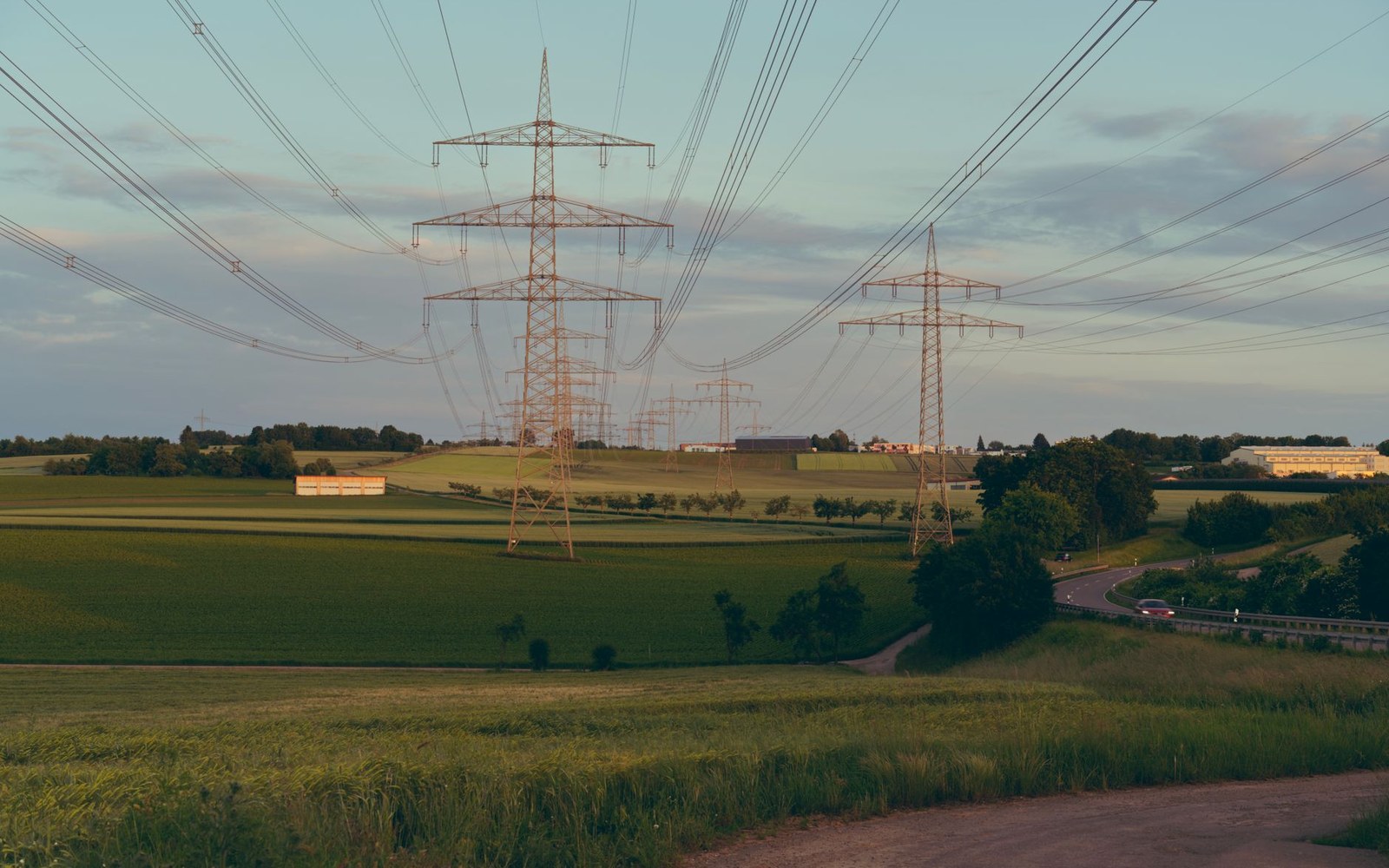
BEAD money is allocated by formula to states, and unserved locations like these are what the formula counts.
Photo: JIUN-JE LIN / Pexels
The Law and the Money
Congress passed the Infrastructure Investment and Jobs Act in November 2021, and buried inside its 2,700 pages was a commitment without precedent in American telecommunications policy: $42.45 billion designated specifically for broadband construction in locations private markets had declined to serve. The vehicle was the Broadband Equity, Access, and Deployment programme, administered by the National Telecommunications and Information Administration within the Department of Commerce.
BEAD was not the only broadband provision in the law — separate allocations addressed digital equity, middle-mile infrastructure and tribal connectivity — but it was by far the largest, and it set the political benchmark against which everything else would be measured. President Biden signed the bill in November 2021 with Senators from both parties present; the programme was framed, then and since, as a bipartisan infrastructure achievement. The practical question — how money becomes deployed fibre — turned out to be considerably harder than the appropriation.

Feasibility studies are public records, and most of them cite the same handful of towns.
Photo: Artem Podrez / Pexels
The NTIA did not simply write fifty checks. The programme imposed a layered sequence of planning, mapping, public comment, federal approval and state procurement before any construction dollar could be obligated. That sequence, designed to prevent the waste and overbuild that had plagued earlier federal broadband programmes, also meant that the gap between appropriation and deployment would be measured not in months but in years.
Formula, Maps and the Challenge Problem
The $42.45 billion was distributed among states, territories and the District of Columbia by formula. Each jurisdiction's allocation derived from its count of unserved locations — defined by NTIA as addresses lacking access to 25/3 Mbps service — as recorded in the FCC's national broadband map. Minimum allocations of $100 million per state ensured that even sparsely populated states without large unserved populations received enough to build a meaningful programme. Larger states with extensive rural gaps, including Texas, North Carolina and Mississippi, received allocations in the billions.
The map problem arrived immediately. The FCC's broadband map, which replaced the old Form 477 system and launched in November 2022, relied on provider-reported coverage data: if a carrier certified that it could serve an address at the threshold speed, that address was counted as served and excluded from BEAD eligibility. Carriers had every financial incentive to report broad coverage and every disincentive to report gaps, because gaps meant competition from a federally funded network.
The NTIA built a challenge process into BEAD to correct this, allowing state broadband offices, local governments and individual address holders to dispute coverage claims. The challenges were consequential — in some states, tens of thousands of locations moved from "served" to "unserved" after challenges were resolved, shifting both eligibility and allocation — but they also added months to the timeline. States had to conduct outreach, compile challenges, submit them to the FCC and wait for adjudication before their final eligible location counts were confirmed.
Initial Proposals, Volume Two, and Federal Review
With location counts settled, each state submitted an Initial Proposal — Volume I addressing programme structure and Volume II addressing the technical and financial specifics of planned deployment. The NTIA reviewed each submission and could request revisions before approving a state to move toward subgrantee selection, the stage at which actual internet service providers, electric cooperatives or municipalities would be chosen to build the networks.
The edge of a service territory. Past it, a map dispute decides on paper who counts as served.
Photo: Adi Nagesh / Pexels
The review process was deliberate and, critics argued by 2024, too slow. The NTIA was reviewing documents from fifty-six jurisdictions simultaneously, each running into hundreds of pages. Some states submitted plans that NTIA found non-compliant with programme rules — particularly around open-access requirements, cost controls and the preference for fibre as the primary technology. States had to revise and resubmit. By late 2024, NTIA reported that it had approved Initial Proposals from all fifty states and territories, but approval of Volume II plans — the prerequisite for subgrantee selection — remained incomplete across much of the country.
A change in administration in January 2025 introduced new uncertainty. The incoming administration signalled interest in revising BEAD's rules, particularly the fibre preference and the open-access provisions that some Republican governors had also opposed. Alan Davidson, who led NTIA under the Biden administration and oversaw the programme's early architecture, departed. The status of pending Volume II reviews, and whether rule changes might require states to revise already-approved plans, remained unresolved as of mid-2025.
What the Delay Costs
Every month of delay is a month in which unserved households remain unserved. The people most affected are not in urban areas where competition among providers has driven at least some investment; they are in rural Appalachia, on the Navajo Nation, in the Mississippi Delta, in counties across West Virginia where the absence of broadband is not a convenience problem but a barrier to telehealth, remote work, education and commerce. The Pew Research Center has documented the persistence of the digital divide along lines of income, race and geography; BEAD was designed precisely to address the geography dimension at scale.
The programme's delay also interacts badly with the expiration of the Affordable Connectivity Program in June 2024, which had subsidised broadband subscriptions for roughly 23 million low-income households. ACP's end meant that households who would eventually be served by BEAD-funded infrastructure would, in the interim, face higher subscription costs — or lose service entirely. Construction solves the infrastructure problem; it does not replace the affordability subsidy that kept a connection affordable once built.
The Institute for Local Self-Reliance, which tracks community-owned networks through its Community Broadband Networks Initiative, has noted that municipal and cooperative providers tend to move faster through procurement once funding arrives, partly because they are not optimising for shareholder return and partly because local governments have existing relationships with the communities they are wiring. Whether BEAD's subgrantee selection process rewards that speed, or buries it in compliance requirements that advantage larger carriers with dedicated regulatory staff, will shape which kinds of providers actually build the networks.
The $42.45 billion remains appropriated. The fibre remains unspooled. The administrative machinery that connects one to the other is real, necessary and, four years in, still grinding.